Understanding Cloud Modernization: What It Means for Today’s Enterprises
Technological stagnation is the silent killer of modern enterprises. Did you know that maintaining legacy systems consumes up to 70% of IT budgets? That leaves.
On this page
Introduction
Technological stagnation is the silent killer of modern enterprises.
Did you know that maintaining legacy systems consumes up to 70% of IT budgets?
That leaves pennies for innovation.
Enter Cloud Modernization.
This is not just about moving potential data to the cloud.
It is about fundamentally transforming how your business operates.
It is about agility, security, and limitless scalability.
In this guide, we will decode Cloud Modernization for you.
We will explore how to shift from "legacy to cloud" effectively.
We will cover modern IT infrastructure, digital transformation, and key strategies.
You will learn how to leverage tools like Terraform, Azure Cloud, and AWS Cloud.
We will also show you how Devolity Business Solutions can be your strategic partner.
They are experts in navigating this complex journey.
Ready to future-proof your business?
Let’s dive in. 🛡️
What is Cloud Modernization?
Cloud Modernization is the process of upgrading legacy applications.
It involves rewriting or refactoring code to run on modern cloud environments.
It differs significantly from a simple "lift and shift."
Traditional migration just moves old problems to a new server.
Modernization transforms the architecture itself.
It embraces serverless, microservices, and containerization.
This approach unlocks the true value of the cloud.
Why Does Meaningful Transformation Matter?
The business landscape is changing rapidly.
Digital Transformation is no longer optional.
Competitors are moving faster than ever.
Legacy systems hold you back.
They are slow, insecure, and expensive to maintain.
Modernization frees you from these shackles.
It allows you to innovate at the speed of light.
Need expert engineering support? Discover Devolity Cloud Migration Solutions or schedule an architecture consultation with our team.
Join the Devolity
Core Difference: Migration vs. Modernization
| Feature | Cloud Migration (Lift & Shift) | Cloud Modernization |
|---|---|---|
| Approach | Move as-is | Re-architect & Refactor |
| Cost | Low initial, high operational | High initial, low operational |
| Scalability | Limited by legacy design | Limitless, auto-scaling |
| Agility | Low | High (DevOps ready) |
| Value | Infrastructure savings | Business transformation |
Modernization is an investment in your future. 💡
The Pillars of Critical Cloud Infrastructure
To succeed, you need a solid foundation.
Modern IT Infrastructure relies on several key pillars.
Let's break them down.
1. Microservices Architecture
Monolithic apps are like giant cruise ships.
Hard to steer and slow to turn.
Microservices are like a fleet of speedboats.
Each service handles a specific function.
If one fails, the others keep running.
This boosts reliability and agility.
2. Containerization
Containers package code and dependencies together.
This ensures consistency across environments.
Docker and Kubernetes are the leaders here.
They allow you to "build once, run anywhere."
This is crucial for multi-cloud strategies.
3. Automation and DevOps
Manual processes are prone to error.
Automation is the cure.
DevOps practices bridge the gap between dev and ops teams.
Tools like Terraform enable Infrastructure as Code (IaC).
You can provision servers with a few lines of code.
This speeds up deployment times drastically.
4. Cyber Security
Security cannot be an afterthought.
In the cloud, looking at Cyber Security is a shared responsibility.
Modernization builds security into the pipeline.
This is often called "DevSecOps."
It ensures compliance and data protection from day one.
Key Strategies for Cloud Transformation
There is no one-size-fits-all approach.
The "6 Rs" of migration are your guide.
We will focus on the most impactful ones.
Rehosting (Lift and Shift)
This is the fastest method.
You move apps without changing code.
Good for quick data center exits.
But it offers the least long-term value.
Replatforming (Lift and Reshape)
Here, you make small optimizations.
Maybe you switch to a managed database.
You get some cloud benefits without a full rewrite.
It is a middle-ground approach.
Refactoring (Re-architecting)
This is true Cloud Modernization.
You rewrite apps to be cloud-native.
You use serverless functions and microservices.
It takes the most time but offers the highest ROI.
Repurchasing (Drop and Shop)
Sometimes, it is better to buy than build.
Moving to SaaS platforms like Salesforce fits here.
It offloads the maintenance burden entirely.
Real-World Examples of Success
Let's look at how giants do it.
Netflix: The Microservices Pioneer
Netflix began as a monolith.
A database corruption halted shipping for days.
They decided to move to AWS Cloud.
They broke their monolith into hundreds of microservices.
Now, they deploy thousands of times a day.
Their uptime is legendary.
Capital One: Banking on the Cloud
Capital One closed all its data centers.
They went all-in on the cloud.
They used automation to secure financial data.
This allowed them to innovate faster than traditional banks.
They are now a tech company that does banking.
Technical Implementation: A Practical Case Study
Let’s walk through a hypothetical scenario.
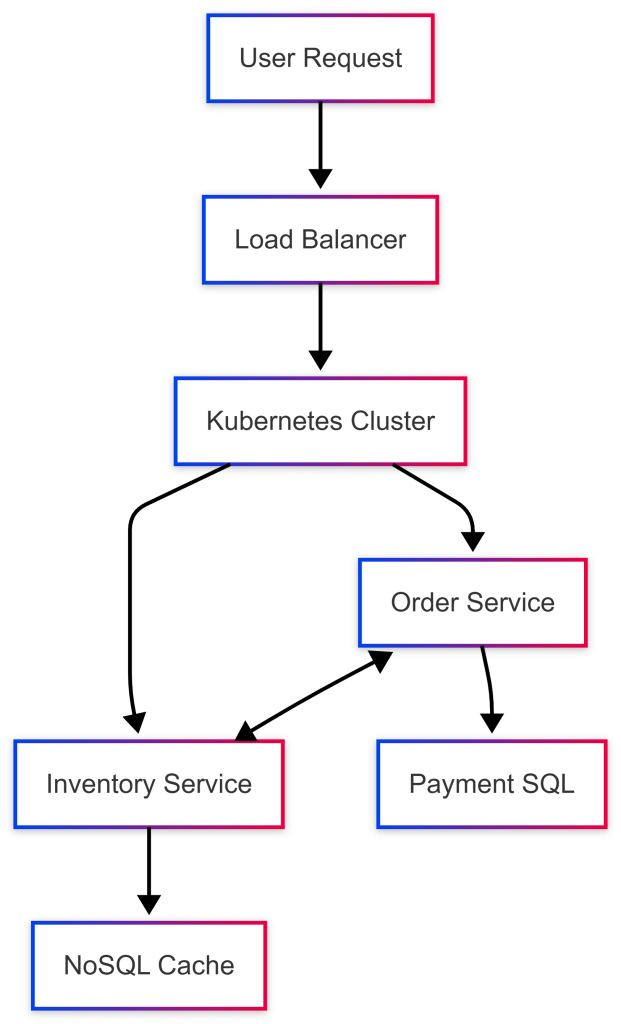
Company: "LegacyCorp" Problem: A slow, crashing e-commerce site. Goal: Modernize for Black Friday traffic.
The "Before" State
- Monolithic Java application.
- Hosted on physical servers.
- Manual deployment (took 4 hours).
- Zero auto-scaling capabilities.
- Result: Downtime during traffic spikes.
The "After" State (Solution)
- Architecture: Microservices on Kubernetes.
- Cloud: Azure Cloud managed cluster (AKS).
- IaC: Provisioned using Terraform.
- CI/CD: Automated pipelines.
- Database: Managed SQL Database.
Architecture Diagram (ASCII)
The Transformation Process
- Assessment: Analyzed dependencies.
- Containerization: Dockerized the application modules.
- Infrastructure: Wrote Terraform scripts for Azure.
- Pipeline: Set up GitHub Actions for builds.
- Cutover: Blue-Green deployment to minimize risk.
Outcome: LegacyCorp handled 10x traffic. Deployment time dropped to 10 minutes. Costs scaled down at night. 🚀
Troubleshooting Common Modernization Hurdles
The road is bumpy. Here is how to fix common issues.
Troubleshooting Guide
| Symptom | Root Cause | Solution |
|---|---|---|
| High Cloud Costs | Over-provisioning resources | Implement FinOps & Auto-scaling |
| Slow Performance | Latency between services | Optimize Verified Network & Caching |
| Security Breaches | Misconfigured S3 buckets | Use automated Cyber Security scans |
| Team Burnout | Manual release processes | Adopt DevOps & CI/CD pipelines |
| Vendor Lock-in | Proprietary services usage | Use open standards (Containers, SQL) |
Don't let these stop you. Plan ahead to avoid them.
How Devolity Business Solutions Optimizes Your Cloud Modernization
You do not have to do this alone.
Devolity Business Solutions is your expert guide.
We specialize in Cloud Modernization strategies.
Our team holds top certifications in AWS Cloud and Azure Cloud.
We have successfully migrated massive enterprise workloads.
Why Choose Devolity?
- Expertise: Deep knowledge of Terraform and DevOps.
- Security: "Security-first" approach to every build.
- Hosting: Premium Devolity Hosting services available.
- AI Integration: We weave AI into your infrastructure.
We turn complex legacy code into modern gold. We optimize your spend and boost your speed. Partner with us to accelerate your Digital Transformation. 🤝Explore Our Services | Contact Our Experts
The Future of Cloud: AI and Beyond
The cloud is evolving. AI is the new frontier. Modern infrastructure must support AI workloads. Scalable compute is required for training models. Automation will become even more intelligent. Enterprises that modernize now will lead the AI race. Those who wait will be left behind. Prepare your data for the AI revolution today.
Conclusion
Cloud Modernization is a journey, not a destination. It requires a shift in mindset and culture. It demands new tools and new skills. But the rewards are immense. You get speed, security, and savings. You empower your team to innovate. Don't let legacy systems anchor you down. Embrace the cloud. Transform your future. ☁️
Ready to Modernize?
Is your infrastructure ready for tomorrow? Don't guess. Contact Devolity Business Solutions today. Let’s build something extraordinary together.
FAQs
1. What is the biggest challenge in cloud modernization? Cultural resistance is often the hardest hurdle. Changing how teams work takes time and leadership.
2. How long does a typical modernization project take? It varies wildly. It can take from 3 months to 2 years, depending on the complexity of the legacy system.
3. Is cloud modernization expensive? The upfront cost can be high. However, the long-term ROI from reduced maintenance and agility is significant.
4. Can I modernize without moving to the public cloud? Yes. You can modernize on-premise using private clouds and Kubernetes, though public clouds offer more ease.
References
- Red Hat: What is Cloud Modernization?
- AWS: Migration and Modernization Strategies
- Microsoft Azure: Cloud Adoption Framework
- Google Cloud: Application Modernization
- Terraform: Infrastructure as Code
- Devolity Business Solutions
Transform Business with Cloud
Devolity simplifies state management with automation, strong security, and detailed auditing.

Enjoyed this article? Get our DevOps & Cloud newsletter
Production blueprints, zero-downtime cutover notes, and security practices twice a month. Zero spam.
Twice a month · No spam · Unsubscribe anytime
More posts like this
Cloud & Technology
MLOps CI/CD: How to Deploy Machine Learning Models Using CI/CD Pipelines
Mar 17, 2026 · 23 min readCloud & Technology

Cloud & Technology
Xen Server Virtualization on Linux: The Complete Setup and Configuration Guide (2026)
Feb 27, 2026 · 23 min readCloud & Technology

Cloud & Technology
How AI Code Assistants Are Replacing Stack Overflow in 2026
Feb 26, 2026 · 17 min readCloud & Technology